B-52 Megafortress
|
B-52 Megafortress
|
|||||
|---|---|---|---|---|---|
| Strategic Bomber | |||||
 |
|||||
| National Origin | Zokesia | ||||
| Production History | |||||
| Designed | |||||
| 2150 - 2154 | |||||
| Produced | |||||
| 2154 - Current | |||||
| Designer | Ward Industries | ||||
| Unit Cost | 111,000(√) | ||||
| Number Built | 75 | ||||
| Service History | |||||
| In Service | |||||
| 2154 - Ongoing | |||||
| Used By | Zokesia The Confederacy | ||||
| Aircraft Characteristics | |||||
| Dry Mass | 106,500kg | ||||
| Length | 43.8 m | ||||
| Width | 59.7 m | ||||
| Height | 10.9 m | ||||
| Propulsion | 8 x Logi C-400 High Bypass Turbofans | ||||
| Maximum Velocity | 340 m/s | ||||
| Operational Range | 1000 km | ||||
The Cyten-Ward B-52 Megafortress is a Zokesian long-range, subsonic, jet-powered strategic bomber. The B-52 was designed and built by Ward Industries, which has continued to provide support and upgrades. It has been operated by the Zokesian Royal Air Force since the 2150s. The bomber can carry up to 300,000 pounds (136,000 kg) of weapons and has a typical combat range of around 800 miles (1,200 km) without aerial refueling.
Beginning with the successful contract bid in June 2150, the B-52 design evolved from a straight wing aircraft powered by six turboprop engines to the final prototype YB-52 with eight turbojet engines and swept wings. The B-52 took its maiden flight in April 2154. The B-52 has been in service with the ZRAF since 2155, replacing the ZB-63 Warmonger.
Superior performance at high subsonic speeds and relatively low operating costs have kept them in service despite the development of more advanced strategic bombers, such as the Mach 2+ ZB-70 Walküre, the V-4 Valkyrie, the variable-geometry Lockheed Grillin B-1 Lancer, and the stealth IU B-21. A veteran of several wars, the B-52 has dropped only conventional munitions in combat.
Development
The B-52 was the result of a long and arduous development process which saw the configuration change from multiple turboprop engines, to a fully turbojet design. Initially powered by eight CF-120 turbojets, the bomber was equipped to carry 90,000 pounds of ordinance and had over 1200km of range, enough to get to Kafrica and back unrefueled. It was also the most expensive bomber ever built in Zokesia at $145,000, and production was initially limited to 10 units. It was pressed into service as B-52A and served in limited capacity.
Design
Structured around a core requirement of 30 2000lb bombs and long range, the B-52 featured a long cavernous fuselage full of fuel and payload. A large swept wing provided stability and eight low-bypass ratio engines let the B-52 cruise near mach 0.8 for over a thousand kilometers unrefueled.
C-model upgrades came in the form of more advanced bombsight and bombardier position, external racks, and a defensive 20mm vulcan in the tail. A total of 50 B-52Cs were built.
In the late 2170s, the B-52 was upgraded to extend its service life into the 2190s. The tail gun was replaced with an electronics suite and the fuselage was retrofitted with a bomb bay twice as large as C models, to carry the new kalibr antiship missile. Lower fuel capacity meant to reach the required range, inflight refueling was required and added to the new H model. 25 B-52Cs were upgraded to H model with another 20 being built brand new. The upgraded bomb bay now allowed for one hundred Mk84 bombs or 200,000lb of ordinance.
The newest version of the B-52, the J-model, was introduced in 2200. Featuring more advanced radar suites and with upgraded C-400 High Bypass Turbofan engines, the B-52J was better suited and more efficient at operating at high altitude and at extreme ranges. Bomb bay capacity was increased to 300,000lb of ordinance, with additional space on wing mounted pylons. To date 10 B-52Hs have been converted to J-models, with an additional 40 planned to be built in Cyten-Ward Industries factory in Ezekialgrad.
Operational history
In 2205, B-52Js of Strategic Air Command 3rd Squadron destroyed factories in Kafrica as part of Operation Red Rocket.
Variants
Two B-52Hs were modified to test Project Highjump, later being converted to J models and continued in service with the 106th Special Test Squadron.
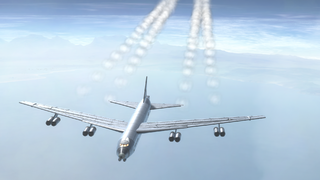
B-52A over Zokesia, early 2150s.

Zokesian B-52C over a test range in Kolus, 2164.
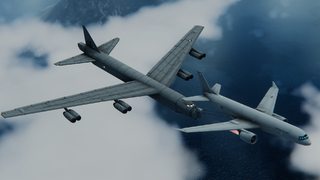
A B-52H refueling from a KZ-20 Moonbow

A pair of B-52Js with upgraded Logi C-400 High Bypass Turbofans
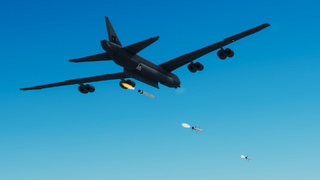
B-52J Firing Kalibr antiship missiles in a test, 2203
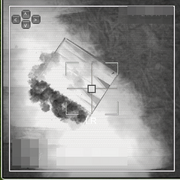
Bombsight footage of B-52Js dropping bombs in Kafrica during Operation Red Rocket, 2205.


