ZP-6 Antares: Difference between revisions
mNo edit summary |
mNo edit summary |
||
| (3 intermediate revisions by the same user not shown) | |||
| Line 2: | Line 2: | ||
|name = |
|name = |
||
|full_name = |
|full_name = |
||
| − | |image = |
+ | |image =ZokeScreenshot37123.png |imagedesc = |
|type=Maritime Patrol Aircraft |
|type=Maritime Patrol Aircraft |
||
|origin=[[Zokesia]] |
|origin=[[Zokesia]] |
||
| Line 25: | Line 25: | ||
Over the years, the ZP-6 has seen numerous design developments, most notably in its electronics packages. A total of 58 ZP-6s have been built, the newest being the ZP-6C. |
Over the years, the ZP-6 has seen numerous design developments, most notably in its electronics packages. A total of 58 ZP-6s have been built, the newest being the ZP-6C. |
||
==Development== |
==Development== |
||
| + | The ZP-6 was built to fulfil a requirement by the [[Zokesian Royal Navy]] for a long range antisubmarine and antisurface warfare aircraft, capable of defending the seas from enemy shipping and submarines. Following the success of Operation Carolinas in the [[North Point Campaign]] for Reclamation, analysts realized the growing number of effective submarines operating on Kerbin, and the vulnerability of future task forces to attacks from below the surface. |
||
| + | |||
==Design== |
==Design== |
||
| + | With advances in sonar technology, a demonstrator aircraft was put together from the airframe of a Z-188 Turboa airliner, now recently on the market as most airliners were divesting them in favor of larger, longer range airlines, and in the place of cargo and passengers, a dual rotary torpedo rack and sonobuoy launcher were installed fore and aft respectively. With an endurance of nearly 25 hours and over 900km, and with refueling the range could be stretched to anywhere on the planet. The ZP-6 was able to loiter and listen in for enemy subs, surface vessels, and attack said targets or operate as airborne command for ship-based antisubmarine helos or attack craft. Featuring a customizable 6-buoy launcher and 8 outboard hardpoints, mission set and weapons loadout varied from operation to operation, but for ASW work typically four antisub sonobuoys were carried as well as two radar-buoys to detect surfaced vessels at longer range. 10 torpedoes on dual racks meant a ZP-6 would have the ordinance to stay on station to respond to multiple threats in one sortie. On the wing pylons, the ZP-6 was able to carry initially brimstone and Maverick antitank weapons, but the ordinance was expanded to HARMs and other antiship missiles as mission dictated. |
||
| + | |||
==Operational history== |
==Operational history== |
||
| + | ZP-6s deployed often to the far flung reaches of the Confederacy, operating out of [[Chikushinal]], [[Krakain]], and [[Fish Island]] regularly in the late 22nd century. |
||
| + | |||
| + | In 2210, a ZP-6 was intercepted over East Hook by a Basilian fighter, but Z-40s of LHD-2 ''Crater Bay'' escorted the Antares to safety and prevented international incident. |
||
| + | |||
==Variants== |
==Variants== |
||
| + | In 2190, the ZP-6B was introduced which featured expanded mission capability and antiship strike capability for the first time. Through the 2110s, there was talk of replacement with a larger, more capable airframe, most notably the [[W-2022 Comforjet|ZP-20 Aquitane]], an ASW aircraft designed from the famous W-2022 Comforjet airframe, but for budgetary reasons this was cancelled in 2212. In 2213, the new ZP-6C was introduced as an upgrade to the avionics and systems aboard, and as of 2214 all ZP-6s operating in the Confederate Navy are of the C-type.<gallery mode="packed" heights="150"> |
||
| − | <gallery mode="packed" heights="150"> |
||
| − | File:ZokeScreenshot17501.png|ZP- |
+ | File:ZokeScreenshot17501.png|ZP-6A patrolling the Baskay, 2176 |
| − | File:ZokeScreenshot24353.png|A ZP- |
+ | File:ZokeScreenshot24353.png|A ZP-6B shows its ordinance as it enters a left bank. |
| − | File:ZokeScreenshot17591.png|Marine [[C-24 Mastodon]] refueling a ZP- |
+ | File:ZokeScreenshot17591.png|Marine [[C-24 Mastodon]] refueling a ZP-6B Antares |
| − | File:ZokeScreenshot36269.png|ZP- |
+ | File:ZokeScreenshot36269.png|ZP-6B Intercepted by an AL-27 of the Basilic Air Force over East Hook, 2210. |
| + | File:ZokScreenshot37118.png|ZP-6C over Kafrica, 2113 |
||
</gallery> |
</gallery> |
||
[[Category:Aircraft]] |
[[Category:Aircraft]] |
||
Latest revision as of 22:16, 5 July 2026
|
ZP-6 Antares
|
|||||
|---|---|---|---|---|---|
| Maritime Patrol Aircraft | |||||
 |
|||||
| National Origin | Zokesia | ||||
| Production History | |||||
| Designed | |||||
| 2160 - 2162 | |||||
| Produced | |||||
| 2162 - Current | |||||
| Designer | Cyten-Ward Industries | ||||
| Unit Cost | 51,000(√) | ||||
| Number Built | 58 | ||||
| Service History | |||||
| In Service | |||||
| 2162 - Ongoing | |||||
| Used By | Zokesia The Confederacy UIF | ||||
| Aircraft Characteristics | |||||
| Dry Mass | 47,800kg | ||||
| Length | 28.5 m | ||||
| Width | 25.9 m | ||||
| Height | 7.5 m | ||||
| Propulsion | 4 x Logi CW-25T Turboprops | ||||
| Maximum Velocity | 340 m/s | ||||
| Operational Range | 450 km | ||||
The Cyten-Ward ZP-6 Antares is a four-engined, turboprop anti-submarine and maritime surveillance aircraft developed for the Confederate Navy and introduced in the 2160s. Cyten-Ward based it on the Z-188 Turboa commercial airliner; it is easily distinguished from the Turboa by its distinctive tail stinger or "MAD" boom, used for the magnetic anomaly detection (MAD) of submarines.
Over the years, the ZP-6 has seen numerous design developments, most notably in its electronics packages. A total of 58 ZP-6s have been built, the newest being the ZP-6C.
Development
The ZP-6 was built to fulfil a requirement by the Zokesian Royal Navy for a long range antisubmarine and antisurface warfare aircraft, capable of defending the seas from enemy shipping and submarines. Following the success of Operation Carolinas in the North Point Campaign for Reclamation, analysts realized the growing number of effective submarines operating on Kerbin, and the vulnerability of future task forces to attacks from below the surface.
Design
With advances in sonar technology, a demonstrator aircraft was put together from the airframe of a Z-188 Turboa airliner, now recently on the market as most airliners were divesting them in favor of larger, longer range airlines, and in the place of cargo and passengers, a dual rotary torpedo rack and sonobuoy launcher were installed fore and aft respectively. With an endurance of nearly 25 hours and over 900km, and with refueling the range could be stretched to anywhere on the planet. The ZP-6 was able to loiter and listen in for enemy subs, surface vessels, and attack said targets or operate as airborne command for ship-based antisubmarine helos or attack craft. Featuring a customizable 6-buoy launcher and 8 outboard hardpoints, mission set and weapons loadout varied from operation to operation, but for ASW work typically four antisub sonobuoys were carried as well as two radar-buoys to detect surfaced vessels at longer range. 10 torpedoes on dual racks meant a ZP-6 would have the ordinance to stay on station to respond to multiple threats in one sortie. On the wing pylons, the ZP-6 was able to carry initially brimstone and Maverick antitank weapons, but the ordinance was expanded to HARMs and other antiship missiles as mission dictated.
Operational history
ZP-6s deployed often to the far flung reaches of the Confederacy, operating out of Chikushinal, Krakain, and Fish Island regularly in the late 22nd century.
In 2210, a ZP-6 was intercepted over East Hook by a Basilian fighter, but Z-40s of LHD-2 Crater Bay escorted the Antares to safety and prevented international incident.
Variants
In 2190, the ZP-6B was introduced which featured expanded mission capability and antiship strike capability for the first time. Through the 2110s, there was talk of replacement with a larger, more capable airframe, most notably the ZP-20 Aquitane, an ASW aircraft designed from the famous W-2022 Comforjet airframe, but for budgetary reasons this was cancelled in 2212. In 2213, the new ZP-6C was introduced as an upgrade to the avionics and systems aboard, and as of 2214 all ZP-6s operating in the Confederate Navy are of the C-type.
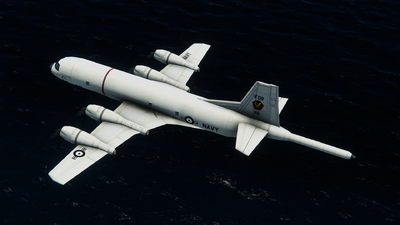
ZP-6A patrolling the Baskay, 2176
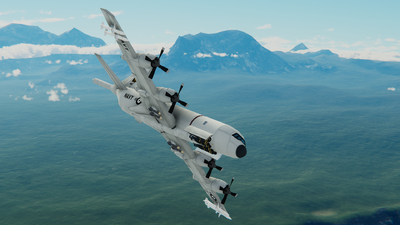
A ZP-6B shows its ordinance as it enters a left bank.
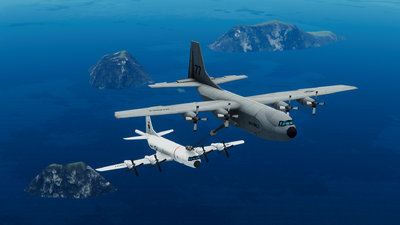
Marine C-24 Mastodon refueling a ZP-6B Antares
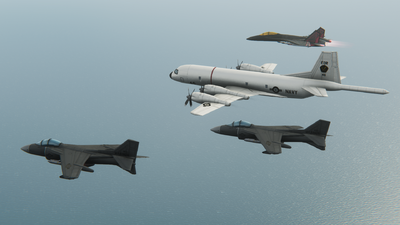
ZP-6B Intercepted by an AL-27 of the Basilic Air Force over East Hook, 2210.
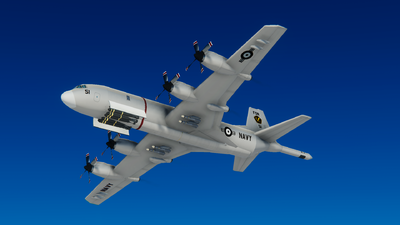
ZP-6C over Kafrica, 2113


